Skip to content
To build a durable, long‑lasting deck, it’s essential to understand how to fasten composite decking. Composite boards are engineered for strength and low maintenance, but their performance depends on proper installation. Unlike traditional wood, these materials respond differently to temperature shifts and daily use, making fastening a critical step. Choosing the right approach ensures stability, consistent appearance, and long‑term reliability, turning overlooked details into the foundation of a successful outdoor project. Let’s dive deeper into the process and what it entails for your next deck installation project!
What Does It Mean to Fasten Composite Decking?
Fastening composite decking means attaching composite deck boards to the underlying frame using approved fastening systems. The purpose is to keep boards secure while allowing them to move naturally as conditions change. Composite decking differs from wood decking in that it expands and contracts more consistently and predictably. Proper fastening supports this movement without causing surface stress, uneven spacing, or board shifting, helping the deck maintain its structural integrity and appearance over time.

Why Proper Fastening Matters for Composite Decking
Knowing how to fasten composite decking ensures stability, durability, and a polished finish. Proper fastening supports natural expansion, prevents warping or gaps, and protects warranties. When boards are secured correctly, the deck remains reliable, safe, and visually appealing, delivering long‑term performance that enhances outdoor living spaces with confidence and consistent quality throughout its lifespan.
Types of Composite Deck Fastening Systems
Several systems are used to fasten composite decking, each serving a specific purpose based on the deck layout and design goals.
Hidden Fasteners for Composite Decking
Hidden fasteners secure boards along the sides rather than through the surface. These systems use clips that fit between boards and attach them to the frame below. Because the fasteners are not visible from above, they create a smooth, uniform deck surface. Hidden fasteners are commonly used in main deck areas where appearance is a priority and uninterrupted board lines are desired.
Face Screws for Composite Deck Boards
Face fastening involves driving screws directly through the top of the deck boards into the frame. This method is often required for starter boards, perimeter areas, and sections requiring additional holding strength. Screws designed for composite materials help reduce surface damage and provide a secure connection. While the fasteners are visible, face fastening is sometimes the most reliable option for some regions of the deck.
Plug Systems for Composite Decking
Plug systems combine the strength of face fastening with a cleaner finished look. Screws are installed through the board surface and then concealed with matching plugs. This approach is commonly used for borders, edges, and stairs where both strength and appearance matter. Plug systems help create a more consistent look while maintaining secure attachment.
How to Fasten Composite Decking Step by Step
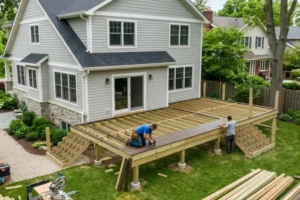
A straightforward, consistent process ensures composite decking is fastened correctly from start to finish. Proper preparation, alignment, and secure fastening techniques create a durable, attractive deck built for long‑term performance.
Step 1: Prepare the Deck Frame
Before fastening begins, the deck frame must be carefully prepared. Joists should be level, evenly spaced, and securely attached to provide stability. The framing material must be compatible with composite decking, and any uneven areas must be corrected. A solid, well‑constructed frame ensures proper board alignment, prevents shifting, and supports the long‑term durability of the finished deck surface.
Step 2: Install the First Deck Board
The first deck board establishes alignment for the entire deck surface. Whether using starter clips or face fastening, careful placement is essential. Proper spacing from edges allows natural board movement, while precise alignment ensures straight, consistent lines across the deck. This initial step sets the foundation for a professional finish and helps maintain structural integrity throughout installation.
Step 3: Fasten the Remaining Deck Boards
As the composite deck installation continues, boards should be fastened consistently and carefully. Fasteners must be evenly spaced, and the spacing between boards must be uniform to accommodate expansion. Periodic checks during installation help maintain alignment and prevent shifting. Consistent fastening practices ensure the deck remains secure, visually appealing, and capable of withstanding everyday use without compromising strength or stability.
Step 4: Secure Deck Borders and Stairs
Deck borders and stairs require extra attention because they experience higher foot traffic and movement. Face fastening is often used here to provide added strength, while plug systems can maintain a clean appearance. Secure attachment in these areas enhances safety, prevents loosening, and supports long‑term durability. Proper fastening ensures borders and stairs remain stable, reliable, and visually cohesive with the overall deck design.
Common Mistakes to Avoid When Fastening Composite Decking
To fasten composite decking requires attention to detail, and avoiding common mistakes helps ensure strength, durability, and a clean finish. Poor installation choices can compromise both performance and appearance over time.
- Over‑tightening fasteners – Restricts natural board movement and creates unnecessary stress.
- Incorrect spacing – Leads to surface issues as boards expand and contract with changing conditions.
- Using the wrong fasteners – Non‑composite fasteners may damage boards or reduce holding strength.
- Neglecting frame preparation – Uneven or unstable framing can cause misalignment and long‑term problems.
- Skipping periodic checks – Failing to monitor alignment during installation increases the risk of uneven surfaces.
Careful planning and consistent fastening practices prevent these issues and support lasting deck performance.
Can You Fasten Composite Decking in Cold Weather?
Composite decking can be fastened in cold weather, but installation requires extra care. Boards may react differently to lower temperatures, making proper spacing and careful handling essential. Freezing conditions can affect flexibility and alignment, so planning helps maintain consistency throughout the project.
By accounting for environmental changes and adjusting techniques accordingly, you can ensure the decking remains secure, stable, and visually appealing. Thoughtful preparation supports long‑term durability, even in challenging climates.
DIY vs Professional Composite Deck Installation

Choosing between doing it yourself and hiring a professional affects how composite decking is fastened, how it performs over time, and how confident homeowners feel about the finished result.
Challenges Homeowners Face with DIY Installation
DIY composite deck installation often presents challenges that affect consistency and durability. Without professional guidance, minor errors can accumulate, leading to uneven surfaces and reduced performance.
- Maintaining even spacing across boards is difficult
- Selecting fastening systems causes confusion
- Misusing tools damages boards
- Aligning boards consistently requires patience
- Allowing for natural movement is overlooked
- Small errors affect appearance
- Inconsistent fastening creates uneven surfaces
- Limited familiarity increases mistakes
- Installation takes longer
- Correcting errors is difficult
Benefits of Hiring Composite Deck Builders in Rochester, MI
Professional composite deck builders Rochester, MI provide accuracy, efficiency, and confidence. Their expertise ensures proper fastening, alignment, and durability, resulting in polished decks that perform well over the long term.
- Professionals understand composite behavior.
- Fastening methods follow manufacturer guidelines.
- Spacing and alignment are handled consistently
- Installation supports natural movement
- Proper tools are used for each system
- Borders and stairs receive attention
- Work completed efficiently and cleanly
- Errors are prevented rather than corrected
- Finished decks look intentional
- Builders account for local conditions
FAQs About Fastening Composite Decking
These frequently asked questions address common concerns about fastening composite decking and help homeowners understand proper installation practices before work begins.
What is the best way to fasten composite decking?
The best approach depends on layout, visibility, and usage areas. Hidden fasteners create a smooth surface for main deck boards, while face fastening is often necessary for edges, borders, and stairs where added strength and secure attachment are required.
Do composite deck boards need pre-drilling?
Pre-drilling may be needed depending on the fastening system and board placement. It helps reduce stress near board ends, supports cleaner fastener seating, and lowers the risk of surface damage during installation.
Can I use regular deck screws on composite decking?
Regular wood screws are not designed for composite materials and may cause cracking or poor holding strength. Composite-specific fasteners are engineered to seat correctly, protect the board surface, and maintain long-term performance.
How far apart should fasteners be placed?
Fastener spacing should follow the manufacturer’s guidance to allow natural movement and ensure even support. Consistent placement helps prevent shifting, surface stress, and alignment issues, ensuring the deck remains stable and visually uniform over time.
Final Tips for Long-Lasting Composite Deck Performance
To guarantee your composite deck performs well for years to come, consider a few essential maintenance tips. Regularly clean your deck with a mild soap and water to remove dirt and debris. Inspect for any loose fasteners or boards and address them promptly. Additionally, avoid placing heavy objects directly on the surface to prevent warping. Following these tips will secure lasting durability and beauty, especially when you fasten composite decking correctly from the start.
Planning a composite deck project? Contact trusted composite deck builders Rochester, MI, for professional deck design and installation you can rely on. Get your personalized estimate from Michigan Decks today!