Skip to content
Summary Highlights
| Choosing between a wood or composite deck is key to a successful outdoor home improvement project. While wood decking offers a natural look and lower upfront costs, it requires regular maintenance and is vulnerable to water damage, termites, and mold. On the other hand, composite material—like those from Trex or TimberTech—is more durable, low-maintenance, and often backed by a long warranty. Though the cost of Trex vs wood is higher initially, composite offers better long-term value and resistance to insects, UV exposure, and rot. This guide helps you compare performance, aesthetics, and return on investment so you can confidently choose the right decking for your lifestyle and climate. |
Homeowners today want more than just good-looking outdoor spaces—they want something that lasts, is easy to maintain, and adds long-term value.
One of the biggest decisions in building or upgrading your outdoor living area is choosing between a wood vs composite deck. Each option has distinct pros and cons, and understanding the differences can help you pick the right material for your lifestyle, budget, and aesthetic.
Whether you’re planning for summer BBQs, increasing resale value, or creating a relaxing outdoor escape, the material you choose sets the tone for how your deck performs and looks over time. Let’s explore everything you need to know about wood and composite decking so you can make a confident, informed decision.
Why You Need to Choose the Right Decking Materials
Whether you’re planning a new build or replacing an older decking, your choice of materials will shape your deck’s performance, longevity, and look. While a traditional wood style deck delivers classic appeal, composite style decking offers long-term ease and modern durability. With either, you’re making a significant investment, so choosing wisely now saves time and money later.

What is a Wood Deck?
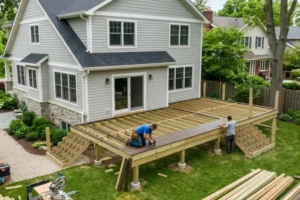
Wood decking remains a time-tested favorite thanks to its warm, natural look. Many homeowners love the character real wood brings to a space. But a wooden deck comes with responsibilities, especially when it comes to upkeep.
Common Wood Types Used (Pressure-Treated, Cedar, Redwood)
When exploring wood vs composite deck options, choosing the right wood for your deck can make a significant difference in both aesthetics and durability. The common wood types used include:
- Pressure-treated lumber: Budget-friendly and treated to resist rot and insects.
- Cedar: Naturally resistant to decay, with a soft tone and pleasant scent.
- Redwood: Dense and durable with rich coloring, though more expensive.
Natural Appearance and Feel
A wooden deck offers unmatched natural beauty. Each board features unique grain patterns, and the surface has a warmth underfoot that composite can only imitate. Wood also gives you the option to stain or paint in any color.
Pros:
- Natural, rich look
- Customizable with stains/paints
- Affordable upfront
Cons:
- Requires frequent maintenance
- Prone to warping and splinters
- Shorter lifespan without upkeep
Maintenance Needs
If you choose a wood style deck, plan for regular maintenance:
- Sealing or staining every 1–3 years
- Annual power washing
- Occasional repairs for cracked or warped boards
Wood requires care, especially in climates with heavy rain, snow, or intense sun.
Average Costs of Wood Deck Installation
Installing a wooden deck typically costs between $15 and $30 per square foot, depending on factors like the type of wood, design complexity, and location. When considering the average costs of wooded deck installation, remember to factor in additional expenses like permits, labor, and finishing. By understanding these costs, you can budget effectively and choose the right option for your home.
What is a Composite Deck?
Composite decking is made from a mix of recycled plastic and wood fibers. This engineered material is designed to mimic the look of wood while offering greater resistance to the elements and requiring much less maintenance.
What Are Composite Deck Boards Made Of?
Decking options have evolved considerably, and composite deck boards stand out for their innovative composition. Made from a blend of recycled wood fibers and plastic, these boards offer a sustainable alternative to traditional wood.
If you are comparing composite deck boards vs wood, you’ll find that the unique materials provide enhanced resistance to moisture and pests, making them a popular choice for modern outdoor spaces.
Benefits of Composite Style Decking (Durability, Low Maintenance)
When you’re considering an upgrade for your outdoor space, the benefits of composite decking become apparent. A composite deck offers:
- Low maintenance: No staining or sealing required—just an occasional rinse.
- Durability: Withstands extreme weather, fading, and splintering.
- Variety: Comes in many colors and grain patterns.
- Sustainability: Often made with recycled content.
Common Composite Decking Brands
Popular composite type decking brands include:
- Trex
- TimberTech
- Fiberon
Each offers product lines in different colors, finishes, and price points. Most include manufacturer warranties ranging from 25 to 50 years.
Average Costs of Composite Deck Installation
Typically, you can expect:
- Material costs: $2 to $5 per square foot
- Labor costs: $5 to $10 per square foot
- Additional features: $1 to $3 per square foot
Although this is more expensive upfront than wood, the minimal maintenance makes it a substantial long-term value.
Head-to-Head Comparison: Composite Deck vs Wooded Deck (Table Form)
When deciding between a wood vs composite deck, you’ll want to evaluate several key factors. These include cost, durability, maintenance needs, appearance, and eco-friendliness.
| Feature | Wood Deck | Composite Deck |
| Initial Cost | $15–$30 per sq ft | $25–$45 per sq ft |
| Maintenance | High—staining, sealing | Low—just rinsing |
| Lifespan | 10–15 years (with upkeep) | 25+ years |
| Appearance | Natural grain, customizable | Uniform wood-like patterns |
| Eco-Friendliness | Renewable resource | Often made with recyclables |
| Resale Value | Good with upkeep | Growing appeal among buyers |
Which Decking Option is Best for Your Rochester Hills Home?

Choosing the right decking option comes down to your lifestyle, preferences, and the climate where you live. Think about how much time you’re willing to spend on maintenance, whether you prefer the natural look of real wood or the modern consistency of composite, and how your deck will stand up to weather conditions in Rochester Hills.
Best for Budget-Conscious Homeowners
If you’re budget-conscious, consider these factors:
- Initial Cost: Wood generally has a lower upfront price compared to composite.
- Maintenance: Factor in the long-term costs of upkeep.
- Lifespan: Evaluate how long each option lasts before needing replacement.
Best for Long-Term, Low-Maintenance Living
Composite type decking is ideal if you’d rather relax than maintain your deck. If you want something that looks good for decades without sanding, sealing, or worrying about splinters, composite is the way to go.
Best for Natural-Look Enthusiasts
For those who crave the authentic charm of natural wood, traditional decking options can be incredibly appealing. Here’s why you might prefer wood to composite:
- Aesthetic Appeal: Nothing beats the warmth and beauty of real wood grain.
- Customization: You can easily stain or paint it to fit your style.
- Natural Feel: Wood provides a more organic texture underfoot.
Consider Your Climate and Outdoor Use
Your local weather plays a significant role in deck longevity:
- Humid or rainy climate: Composite resists moisture better.
- Dry, sunny regions: Wood can last long if maintained.
- Extreme temperatures: Composite resists warping better than wood.
Choosing the Right Deck for Your Rochester Hills Home
When you’re deciding between wood and composite, it’s essential to weigh your lifestyle, budget, and aesthetic preferences. The wood vs composite deck decision often comes down to whether you prioritize low maintenance and long-term durability, or if the charm and customizability of natural wood appeal more to you. If you value minimal upkeep, composite is likely your best bet. However, if you love the warm, organic feel of wood, just be prepared for more hands-on care.
Ultimately, choose the option that aligns with your needs and enhances your outdoor living space. Either way, it’s smart to consult with a local deck builder to explore your options, get a quote, and create a space that fits your lifestyle and adds value to your home.
Talk to a Local Deck Installer for a Free Estimate!
Frequently Asked Questions
1. How long does each type of deck last?
Composite decking typically lasts 25 to 30 years or more with minimal upkeep, thanks to its resistance to rot, moisture, and pests. A pressure-treated wood deck, by contrast, may last 10 to 15 years, or longer with excellent maintenance. For example, sealing your wooden deck regularly can extend its lifespan, but skipping maintenance may lead to early deterioration.
2. Can I paint or stain a composite deck?
Most composite type decking is designed with built-in color, so painting or staining is usually unnecessary, and not always recommended. Some manufacturers advise against it, as it may void the warranty or lead to flaking and peeling. If you’re looking to refresh your deck’s look, try a specialized composite deck cleaner or surface restorer approved by the brand.
3. Is composite decking slippery when wet?
Generally, composite style decking has a textured surface to improve traction, but like any outdoor surface, it can become slippery when algae or mildew build up. Regular cleaning and good drainage help reduce this risk. If your deck is in a shaded or damp area, consider boards with enhanced anti-slip features or install anti-slip strips for added safety.
4. How often should I seal or stain a wood deck?
Most wood style decks should be sealed or stained every 1 to 3 years, depending on your climate and how much sun or moisture exposure the deck receives. Look for signs like fading color, splintering, or water soaking into the wood—these indicate it’s time for treatment. Proper sealing protects the wood and maintains its appearance.
5. Which decking option is more eco-friendly?
Composite decking is often more eco-friendly in the long run. Many brands use recycled plastic and reclaimed wood fibers, diverting waste from landfills. While wood is a renewable resource, it does require tree harvesting and often chemical treatments for durability. Look for FSC-certified wood if going the lumber route, or opt for recycled composite brands if sustainability is a priority.
6. How do extreme weather conditions affect decking?
Wood decks may expand, contract, crack, or warp with extreme heat, cold, or humidity. Composite boards, while more stable, can still get hot under intense sun. If you live in a region with heavy snow or prolonged sunlight, composite type decking may require less long-term care and stay structurally sound for longer.
7. Which deck type adds more home value?
Which deck type adds more value to your home? Generally, composite decks tend to offer more long-term value due to their durability and low maintenance. Consider these factors: Longevity: Composite lasts longer than wood. Maintenance Costs: Less upkeep means savings. Aesthetic Appeal: Composite’s variety can attract buyers. Your choice can impact resale value considerably.