Skip to content

Michigan winters can be tough on outdoor living spaces. Between heavy snowfall, freezing rain, fluctuating temperatures, and repeated freeze-thaw cycles, your deck faces months of exposure to moisture and changing weather conditions. Without proper preparation, that exposure can contribute to wood deterioration, surface staining, damaged finishes, and problems with deck components.
So, should you use deck covers for winter? The answer depends on your decking material, the condition of your existing structure, and the type of cover you plan to install. While certain covers can protect outdoor furniture and reduce direct exposure to precipitation, a poorly ventilated tarp can trap moisture and create additional problems.
At Michigan Deck Builders, we believe protecting your deck starts with understanding what it needs. A wood deck requires different maintenance than a composite deck, and an aging structure may need more than seasonal cleaning to make it through another Michigan winter.

In this guide, we’ll explain how to winterize your deck, when covering it makes sense, which maintenance practices offer the most protection, and how to choose the right long-term solution for your home. Let’s take a closer look now at how to protect your deck in winter here in Michigan:
WHY MICHIGAN WINTERS DEMAND A DIFFERENT APPROACH TO DECK CARE
Michigan’s climate presents several challenges for outdoor structures. Snow accumulation, prolonged moisture exposure, freezing temperatures, and seasonal temperature fluctuations can all affect how your deck performs over time.
Understanding these conditions helps you make better decisions about maintenance, materials, and winter protection.
The Western Michigan Effect on Deck Surfaces
Homeowners in Western Michigan, particularly around Grand Rapids and lakeshore communities near Muskegon and Holland, are familiar with lake-effect snow, the massive piles that can accumulate, and the frigid temperatures that make covering a deck for winter a necessity.
Heavy snowfall can leave decks buried for extended periods. As snow accumulates, it introduces additional weight and keeps decking surfaces exposed to moisture. When temperatures fluctuate, melting snow can seep into small cracks, joints, and other vulnerable areas before freezing again.
Wood decking is particularly susceptible to repeated moisture exposure. Over time, inadequate maintenance can contribute to:
- Cracking and splitting boards.
- Peeling or deteriorating stain and sealant.
- Surface discoloration and staining.
- Moisture-related deterioration.
- Corrosion or loosening of improperly maintained fasteners.
In Southeast Michigan, including Ann Arbor and the Detroit Metro area, changing temperatures and freeze-thaw cycles also deserve attention. Snow may melt during a brief warm spell before temperatures drop again, leaving moisture to freeze on and around the deck.
What does this mean for your deck?
The goal isn’t necessarily to keep every snowflake off your deck. The best deck covers for winter in this state aren’t about blocking it all out. It’s about managing moisture, maintaining proper drainage, protecting vulnerable materials, and addressing structural concerns before they become more expensive repairs.
Understanding Michigan’s Frost Line and Deck Footings
Winter deck protection involves more than maintaining the visible decking boards. The foundation supporting your structure matters just as much.
Michigan’s residential construction requirements generally establish a 42-inch minimum footing depth for exterior foundations, subject to applicable exceptions and local building requirements. Proper footing depth helps reduce the risk of movement caused by freezing and thawing soil.
If your deck posts appear to shift, have uneven sections, or show noticeable movement after winter, the issue may involve the footings or underlying structure rather than the deck surface.
Adding a cover or applying a protective coating won’t fix an underlying structural problem.
If you notice recurring movement, loose connections, or sagging, we recommend having a qualified professional evaluate the deck. Addressing structural concerns early is key to keeping your outdoor living space safe and functional.
DO DECK COVERS FOR WINTER ACTUALLY HELP?
Deck covers for winter can be useful, but they aren’t necessary for every home or decking material. While it is obvious you’ll want to protect your deck from Michigan winters, it is important to choose the right approach and start before the cold weather really sets in.
The right covering can protect outdoor furniture, limit direct precipitation exposure, and make your outdoor space easier to maintain. However, the wrong cover can interfere with drainage and ventilation. Before investing in a winter covering, consider what you’re protecting, how your deck is built, and which environmental factors it will face most.
When a Deck Cover Makes Sense
A deck cover may be worthwhile in several situations:
- You have outdoor furniture or built-in features. A properly designed cover can protect furniture, outdoor kitchens, storage areas, and other features from snow and rain.
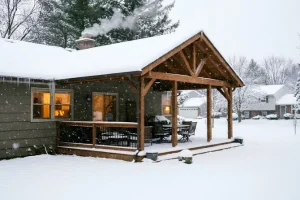
- Your deck has an existing roof or pergola. You may already have overhead protection that reduces direct exposure to precipitation. You can focus on maintaining the exposed decking and managing moisture.
- You want to create a more usable outdoor space. A permanent covered structure can provide shade, rain protection, and year-round comfort.
- You have an older wood deck. A roof can reduce direct exposure to precipitation, although it does not replace proper sealing, cleaning, or structural maintenance.

When Covering a Deck Can Cause Problems
A common mistake is wrapping an entire deck in a waterproof tarp and leaving it sealed throughout the winter.
Although this might seem like an effective way to keep moisture out, condensation can build up under an improperly installed cover. Without sufficient airflow, trapped moisture may contribute to mold, mildew, staining, and deterioration of wood components.
Covers can also create other problems if they:
- Prevent water from draining away from the deck.
- Collect heavy snow, placing additional stress on the covering and its supports.
- Rub against decking surfaces during windy conditions.
- Trap leaves and debris underneath.
- Restrict ventilation around the deck.
If you choose a temporary cover, select one designed for outdoor use and install it according to the manufacturer’s instructions. Allow for appropriate ventilation and drainage rather than sealing the entire deck.

Our recommendation: For most homeowners, proper cleaning, routine maintenance, and appropriate snow removal are more important than completely covering an exposed deck. Call our decking experts today to see what deck covers for winter are best for your home.
Which Type of Deck Cover Should You Choose?
Not every covering provides the same level of protection. Your options range from inexpensive temporary solutions to permanent structures designed around your home’s architecture.
| Covering option | Primary benefit | Best suited for |
| Breathable deck cover | Helps protect selected areas while allowing airflow | Furniture and smaller deck areas |
| Waterproof furniture covers | Protects individual outdoor furnishings | Seasonal furniture storage |
| Pergola with roof panels | Provides overhead shade and precipitation protection | Homeowners wanting a partially protected outdoor space |
| Covered porch | Offers more substantial protection from rain and snow | Year-round outdoor living |
| Retractable awning | Provides seasonal shade and rain protection | Homeowners wanting flexible coverage |
When choosing a deck cover for winters in Michigan, consider snow accumulation, drainage, wind exposure, ventilation, and the covering’s structural requirements.
A permanent roof or pergola must be designed to accommodate applicable local snow and wind loads. Don’t assume an existing deck can support a new roof structure.
Thinking about adding deck covers for winter this season? We can help you explore design options that complement your home while accounting for Michigan’s weather and structural requirements.
HOW TO PROPERLY WINTERIZE YOUR DECK IN MICHIGAN
Winterizing your deck involves more than putting a cover over it. The most effective preparation combines cleaning, inspection, appropriate surface maintenance, and good drainage practices.
We recommend completing these tasks before consistently freezing temperatures arrive.
1. Clean Your Deck Before Winter
Start by removing furniture, planters, outdoor rugs, grills, and decorative accessories that could trap moisture or become damaged during freezing weather.
Sweep away leaves, dirt, and other debris. Pay particular attention to the gaps between decking boards, where organic material can accumulate and interfere with drainage.
Use a cleaning product appropriate for your decking material:
- Wood decking: Choose a wood deck cleaner formulated for your specific wood type and existing finish.
- Composite decking: Follow the manufacturer’s recommended cleaning instructions. Many composite surfaces can be cleaned using mild soap, water, and a soft-bristled brush.
- PVC decking: Use the cleaning products approved for your particular decking system. Don’t assume one cleaning solution works for every decking material. Harsh chemicals and improper pressure washing can damage certain surfaces or affect manufacturer warranties.
2. Inspect the Deck for Damage
Once your deck is clean, take time to inspect its condition.
Look for:
- Cracked, split, or soft decking boards.
- Loose or protruding fasteners.
- Damaged railings and stairs.
- Peeling or worn protective finishes.
- Signs of moisture damage around posts and support beams.
- Deterioration around the ledger board where the deck connects to your home.
- Areas where water collects instead of draining.
Pay particular attention to the ledger board connection. Because this area connects the deck to your house, water infiltration or deteriorating connections can create serious structural concerns.
If you discover soft wood, significant movement, or compromised connections, have the structure evaluated before winter.
3. Apply Appropriate Protection to Wood Decking
Wood decks benefit from regular maintenance, particularly in climates with substantial seasonal moisture exposure.
If your deck needs it, applying a suitable penetrating stain or water-repellent sealer can help reduce moisture absorption and protect the wood surface.
The best deck coating for winter protection depends on several factors:
- The type and condition of the wood.
- Whether the deck has been stained or sealed before.
- The existing finish and its compatibility with new products.
- The product’s recommended application temperature.
- The available drying and curing time.
Penetrating stains and sealers are commonly used for wood decks because they can protect the wood without relying on a thick surface film. However, the right product depends on the existing finish and manufacturer’s specifications.
Don’t apply a new coating just because winter is approaching. Check the product label for temperature, moisture, and curing requirements before beginning.
Timing matters: Michigan homeowners should plan wood deck maintenance during suitable fall weather rather than waiting until freezing temperatures are imminent.
4. Maintain Proper Drainage
Good drainage is one of the most important parts of winter deck care.
When water collects between boards, around posts, or beneath the structure, repeated freezing and thawing can create additional stress on vulnerable components.
Before winter, make sure:
- Gaps between boards are free of leaves and debris.
- Downspouts direct water away from the deck and footings.
- Water does not collect around support posts.
- Existing drainage paths remain unobstructed.
- Covered areas have appropriate runoff management.
If your deck consistently holds standing water, the problem may involve its design, slope, or drainage system. We recommend addressing recurring drainage issues instead of relying on seasonal cleaning alone.
5. Remove Snow Carefully
Snow removal is another important part of deck care during Michigan winters.
Although properly constructed decks are designed to accommodate applicable structural loads, you should not assume every existing deck can support unlimited snow accumulation. Age, construction quality, condition, and previous repairs all influence structural capacity.
For routine snow removal:
- Use a plastic shovel without a metal edge when appropriate for your decking material.
- Clear snow in the direction of the deck boards.
- Avoid scraping or striking the surface.
- Use a soft-bristle push broom for light snow.
- Follow your decking manufacturer’s recommendations for ice-melt products.
- Avoid aggressive chipping or prying at ice.
Important: If you notice unusual sagging, movement, cracking sounds, or other signs of structural distress, keep people off the deck and contact a qualified professional. Don’t try to determine remaining load capacity based on snow depth alone.
COMPOSITE VS. WOOD DECKS: WHICH HANDLES MICHIGAN WINTERS BETTER?
Your decking material makes a significant difference in how much maintenance your deck requires during winter. It will also greatly impact your final decision for the right deck covers for winters in the area.
Both wood and composite decking can provide attractive, functional outdoor spaces. However, they respond differently to moisture, temperature changes, and seasonal maintenance.
The Benefits of Composite Decking in Michigan
Composite decking has become an increasingly popular option for homeowners who want the appearance of wood without the same level of ongoing maintenance.
Many modern composite products feature protective outer layers designed to limit moisture penetration and resist common forms of surface deterioration.
Popular options include Trex Transcend and TimberTech composite and PVC decking products.
Benefits can include:
- Less maintenance than traditional wood decking.
- No routine sanding or staining requirements.
- Resistance to rot and splintering associated with conventional wood.
- A wide selection of colors and realistic wood-grain finishes.
- Cleaning requirements that are generally simpler than those for wood.
Composite decking still requires seasonal attention. Remove leaves, dirt, and debris, and clear snow using tools recommended by the manufacturer.
Remember that composite products are not identical. Their cleaning requirements, ice-melt recommendations, and warranty conditions can vary by product line.

The Benefits of Cedar and Premium Wood Decks
Natural wood remains a popular choice for Michigan homeowners who appreciate its appearance and traditional character.
Cedar, in particular, offers natural resistance to decay and insects. Pressure-treated lumber is another common option because it is treated to help protect against biological deterioration.
With proper maintenance, wood decking can last for many years.
However, wood requires more attention than most composite alternatives.
Your maintenance routine may include:
- Periodic cleaning.
- Inspection for splintering and cracking.
- Reapplication of stain or sealer as needed.
- Replacement of deteriorated boards.
- Inspection of fasteners and structural connections.
The biggest consideration is consistency. Skipping maintenance can leave wood more vulnerable to moisture exposure, particularly through Michigan’s winter and spring seasons.

Wood vs. Composite: Winter Maintenance Comparison
| Consideration | Wood decking | Composite decking |
| Moisture resistance | Depends on wood type and maintenance | Generally offers greater moisture resistance |
| Seasonal sealing | May be necessary | Generally not required |
| Cleaning | Requires wood-appropriate cleaners | Requires manufacturer-approved cleaning |
| Snow removal | Use non-damaging tools | Use manufacturer-approved plastic shovels |
| Ice-melt products | Check coating and product compatibility | Follow the specific manufacturer’s recommendations |
| Maintenance requirements | Generally higher | Generally lower |
| Appearance | Natural wood grain | Available in wood-inspired finishes and colors |
Which is right for your home?
If you prefer the natural appearance of wood and don’t mind routine maintenance, cedar or pressure-treated decking may be an excellent choice.
If you want a lower-maintenance outdoor space with fewer seasonal finishing requirements, composite or PVC decking may be worth considering.
At Michigan Deck Builders, we can help you compare materials based on your home’s design, budget, intended use, and maintenance preferences.
PERMANENT COVERED STRUCTURES: THE BEST LONG-TERM WINTER SOLUTION
If you’re tired of preparing an exposed deck every fall, a permanent covered structure may be worth considering.
Unlike temporary deck covers, a properly designed roof or covered porch provides ongoing overhead protection and can make your outdoor space more comfortable year-round.
However, the right design depends on your home, existing deck, available space, and structural requirements.
Covered Porches and Pergola Roof Systems
A covered porch provides more substantial overhead protection than a traditional open deck.
With a properly designed roof and drainage system, it can reduce direct exposure to rain and snow while creating a more comfortable outdoor living area.
Depending on the design, additional features may include:
- Screened openings.
- Privacy panels.
- Outdoor lighting.
- Ceiling fans.
- Weather-resistant flooring.
- Outdoor dining and seating areas.
For Michigan homeowners, these additions can make a deck or porch more functional during spring, summer, and fall.
Pergolas with suitable roof panels offer another option. Depending on the materials and design, they can provide shade and some protection from precipitation while maintaining an open-air atmosphere.
However, pergolas are not automatically designed to support heavy Michigan snowfall. Their frames, connections, foundations, and roofing materials must be selected and engineered for the applicable local conditions.
Retractable Awning Systems
Retractable awnings offer flexibility for homeowners who want seasonal overhead coverage without committing to a permanent roof.
You can extend an awning in warm weather for shade and retract it when you don’t need it.
Many systems are designed to be retracted during winter or other severe weather conditions.
Benefits include:
- Flexible shade and rain protection.
- Less permanent structural modification than adding a roof.
- A variety of fabric and frame options.
- Convenient operation with motorized systems.
However, retractable awnings are not intended to carry unrestricted snow accumulation. Follow the manufacturer’s instructions for retraction, storage, and weather limitations.
Choosing Between a Covered Deck and a Traditional Deck
| Feature | Open deck | Covered deck or porch |
| Direct snow exposure | Higher | Reduced |
| Rain exposure | Direct | Reduced with appropriate roof design |
| Furniture protection | Requires separate covers or storage | Better overhead protection |
| Outdoor usability | Primarily seasonal | Can extend outdoor usability |
| Construction requirements | Standard deck design considerations | Additional roof, load, and drainage considerations |
| Investment | Generally lower initial construction cost | Generally higher initial construction cost |
If you’re planning a new deck or considering upgrading an existing one, think about how you want to use the space beyond the summer months.
Ready to explore a covered outdoor living space? Our team can help you consider designs, materials, and structural requirements for a deck that works with your home and Michigan’s climate.

WHAT MICHIGAN HOMEOWNERS GET WRONG ABOUT WINTER DECK PROTECTION
Even well-maintained decks can experience wear over time. However, a few common maintenance mistakes can increase winter damage or let small issues develop into expensive repairs.
Here are three problems we encourage homeowners to avoid.
1. Waiting Until Spring to Inspect Your Deck
By the time spring arrives, months of snow, moisture, and temperature changes have already affected your deck.
If you wait until damage is visible, you may miss the chance to address small problems before they worsen.
We recommend inspecting your deck every fall, especially if it is older or hasn’t received regular maintenance.
2. Using the Wrong Cleaning and Protective Products
Not every deck cleaner, stain, sealer, or ice-melt product suits every decking material.
For example, a product designed for traditional wood may not suit composite decking. Even composite manufacturers can have different recommendations for cleaning and winter maintenance.
Always check the manufacturer’s care instructions and warranty requirements before applying a new product.
3. Focusing on the Surface Instead of the Structure
A freshly cleaned deck may look great, but its appearance doesn’t tell you everything about its structural condition.
Support posts, beams, joists, footings, railings, stairs, and ledger connections all contribute to your deck’s safety and stability.
If you notice loose connections, deteriorating wood, sagging, or recurring movement, those concerns deserve professional attention.
Our advice: Think of winter preparation as an opportunity to evaluate the entire deck, not just the boards you walk on.

WHY WORK WITH MICHIGAN DECK BUILDERS?
Protecting your outdoor living space starts with choosing the right materials, construction methods, and maintenance approach.
At Michigan Deck Builders, we understand that Michigan homeowners need outdoor structures designed for local weather conditions.
From material selection to covered deck construction, we help homeowners create outdoor spaces that complement their homes and support the way they want to live.
When you work with an experienced local deck builder, you can benefit from:
- Knowledge of Michigan’s climate: We understand the importance of considering snow, moisture, freeze-thaw cycles, and seasonal weather when planning outdoor structures.
- Material guidance: We can help you compare wood, composite, and PVC decking options based on appearance, maintenance, and budget.
- Thoughtful structural planning: Proper support, drainage, connections, and applicable local construction requirements are essential to a well-built deck.
- Customized designs: Your outdoor space should reflect your home, lifestyle, and how you plan to use it.
- Long-term value: Choosing the right materials and construction methods can reduce maintenance needs and protect your investment over time.
We work with homeowners in Lansing, Grand Rapids, Ann Arbor, Southeast Michigan, and communities statewide. We can help homeowners like you prepare for brutal winters and ensure you have the right deck covers to winterize your deck.
Whether you’re maintaining an existing deck, replacing aging wood boards, or planning a new covered outdoor living space, we’re here to help you make informed decisions. Deck winterizing options are only as good as the methods used to apply them.
CLOSING THOUGHTS AND NEXT STEPS
So, should you cover your deck in winter?
For most Michigan homeowners, a complete winter covering isn’t necessary. Proper cleaning, routine inspections, appropriate sealing for wood surfaces, and careful snow removal provide a more practical approach to seasonal deck protection.
However, if your outdoor space includes furniture, built-in features, or areas that would benefit from overhead protection, the right covering may be worth adding.
Your decking material also matters. Wood decks generally require more seasonal maintenance, while composite and PVC alternatives offer lower-maintenance options with their own manufacturer-specific care requirements.
If your deck is more than ten years old, has visible deterioration, or hasn’t been professionally evaluated in several years, consider scheduling an inspection before another Michigan winter. This can go a long way toward ensuring you approach deck care during Michigan winters from the best possible angle from the start.
At Michigan Deck Builders, we work with homeowners throughout Lansing, Grand Rapids, Ann Arbor, Southeast Michigan, and surrounding communities to design and build outdoor living spaces suited to Michigan’s climate.

Ready to protect or upgrade your deck? Contact us today to request a free consultation or discuss all your decking needs. Everything from detailing, installation, maintenance, and winterization is easier with our expert team on hand. You can also explore our portfolio of completed deck projects for ideas and inspiration for deck covers for winters in Michigan.
FREQUENTLY ASKED QUESTIONS
Should I put a tarp over my deck in winter?
You generally don’t need to cover your entire deck with a tarp during winter. A poorly ventilated tarp can trap condensation and moisture. If you use a temporary covering, choose one designed for outdoor use and allow for appropriate airflow and drainage.
What is the best deck coating for winter protection in Michigan?
For wood decks, an appropriate penetrating stain or water-repellent sealer can help reduce moisture absorption. The best product depends on your wood type and existing finish. Follow application temperature and curing requirements. Composite decking generally does not require seasonal sealing.
How much snow can a deck hold before it becomes unsafe?
No universal snow-depth limit applies to every deck. Structural capacity depends on its design, materials, condition, and construction. Heavy, wet snow can add substantial weight. If you notice sagging, unusual movement, or other signs of structural distress, keep people off the deck and contact a professional.
How do I protect my deck from ice and freeze-thaw damage?
Start by clearing debris between boards and ensuring water drains properly. Maintain wood decking with appropriate protective products, and follow your decking manufacturer’s instructions for snow removal and ice-melt products. Avoid damaging the surface when removing accumulated ice.
Is composite decking better than wood for Michigan winters?
Composite decking generally requires less seasonal maintenance and resists moisture-related deterioration better than traditional wood. Wood remains a beautiful option but requires more regular cleaning, inspection, and protective finishing. Your best choice depends on your budget, preferences, and maintenance expectations.
Should I remove snow from my composite deck?
Follow the recommendations for your specific decking product. A plastic shovel or soft-bristle broom is generally preferable to a metal shovel, which can scratch the surface. Some manufacturers say routine snow removal is optional on properly installed decking, but removing accumulated snow can help keep access safe.
Is it worth building a covered deck or porch in Michigan?
A covered deck or porch can make your outdoor living space more comfortable and reduce direct exposure to rain and snow. It can also provide additional opportunities for outdoor dining and entertaining. However, the design must account for appropriate structural support, drainage, and local snow and wind loads.
When should I winterize my deck in Michigan?
Early fall is generally a good time to prepare your deck for winter. Clean the surface, remove debris, inspect structural components, address drainage problems, and apply appropriate wood treatments while weather conditions still meet the product’s application requirements. Avoid waiting until freezing temperatures arrive.