Skip to content
Are you thinking about an outdoor upgrade? Before deciding, it’s worth understanding what composite decks are. Known for their durability and low maintenance, this material blends wood fibers and recycled plastic. Before committing, explore its pros, cons, and design options to see if it fits your needs. Start your research into what is a composite deck today with this detailed overview, compiled by our skilled team!
Introduction to Composite Decking
Composite decking combines wood and plastic fibers to create a durable, low-maintenance outdoor surface. If you’re asking what a composite deck is, it’s a modern alternative to wood that resists rot, fading, and insect damage. Many deck builders and homeowners now prefer it over traditional wood for its long-term value and ease of care. Let’s explore why composite decking is a wise choice for your outdoor space.

What Is a Composite Deck?
A composite deck is a modern outdoor flooring option made from wood fibers and recycled plastic. It offers the look of real wood with fewer maintenance demands. Composite decking resists fading, staining, and mold, making it ideal for long-term use. It’s available in a variety of colors and textures so that you can match your style.
Unlike wood, it won’t splinter or warp. Many systems use hidden fasteners for a clean, finished look. Easy to install and built to last, composite decking is a safe, stylish, and practical choice for any outdoor space.
Why Homeowners Are Choosing Composite Over Wood
More homeowners are choosing composite decking over traditional wood due to its durability and ease of maintenance. Composite materials resist fading, staining, and warping, even in extreme weather conditions. They’re also eco-friendly, often made from recycled materials. Unlike treated wood, composites don’t require chemical preservatives, making them safer for families and pets.
Composite decks also come in a variety of styles, offering design flexibility. While the initial cost is higher, long-term savings on repairs and maintenance make it a smart investment. With comfort, safety, and sustainability in mind, composite decking is becoming the go-to choice for modern outdoor living.
What Is Composite Decking Made Of?
Composite decking combines recycled wood fibers and plastics to create a durable, low-maintenance material. Various binders and additives enhance its performance, making it suitable for outdoor use.
A Mix of Recycled Wood Fibers and Plastics
Composite decking combines wood fibers and recycled plastics to create a durable, low-maintenance option. This blend resists rot, fading, and insect damage while maintaining a realistic wood appearance.
Composite decking is also environmentally friendly and comes in a variety of colors and textures. With minimal maintenance required, composite decking offers a practical yet stylish solution for your outdoor space, combining aesthetic appeal with functionality.
Types of Binders and Additives Used
Composite decking performance depends on the binders and additives used during production. Binders like polyethylene enhance the bond between wood and plastic, while additives improve resistance to UV, mold, and moisture. These elements keep your deck looking vibrant and clean, even in harsh conditions.
Some composite decking materials include fire retardants for added safety. Understanding what composite deck is made of helps homeowners make informed choices when selecting materials. Choose products suited to your climate for maximum durability and performance.
The Role of Capping and Coating in Durability
Capping and coating protect composite decking from wear and weather damage. A durable cap layer surrounds the core, protecting it from moisture, mold, and stains. Surface coatings further resist fading, scratches, and UV damage, helping to maintain the deck’s appearance with minimal upkeep.
These layers also ensure the deck remains splinter-free, providing a smooth and safe surface. Opting for capped composite decking extends its lifespan and reduces maintenance. Review the protective features of decking materials to ensure your deck is durable and low-maintenance for years to come.
Composite Deck Boards: Styles and Options
When choosing composite deck boards, you’ve got a range of styles and options to contemplate. It is part of the process of figuring out what is a composite deck and what options are available to you.
Grooved vs. Square Edge Boards
Grooved composite boards are designed for hidden fasteners, giving your deck a seamless and modern look with no visible screws. They’re perfect if aesthetics are a top priority. Square-edge boards, by contrast, are compatible with traditional fasteners and offer more flexibility during installation. They’re great for creative deck patterns or DIY projects. Consider your design preferences and skill level when choosing between the two; both options provide a strong, attractive outdoor surface.
Textures, Colors, and Finish Options
Composite decking is available in a variety of textures, colors, and finishes to suit your personal style. You can choose a wood-grain texture for a classic look or a smooth finish for a sleek, modern feel. Color choices range from natural tones to bold shades, allowing complete customization. Finish options, like matte or protective coatings, affect traction and durability. If you’re wondering what a composite deck is, it’s a versatile material that offers both beauty and practicality.
Comparing Hollow vs. Solid Composite Boards
Hollow composite boards are lightweight and budget-friendly, making them easier to handle during installation. They’re ideal for low-traffic areas but may be less durable in the long run. Solid boards are heavier and more robust, designed to handle high foot traffic and harsh weather conditions. Though more expensive, they offer greater longevity and structural integrity. When choosing between the two, think about your deck’s purpose, expected wear, and long-term maintenance preferences.
Benefits of Composite Decking
When considering composite decking, you’ll find several key benefits that make it a smart choice for your home.
Low Maintenance and High Durability
Composite decking stands out for its durability and low maintenance. It resists fading, splintering, and warping—no staining, sealing, or painting is needed. A simple wash keeps it looking great. It’s also mold- and mildew-resistant, making it safer for families and pets. Enjoy a long-lasting, worry-free outdoor space that saves time and eliminates the hassle of constant deck maintenance.
Eco-Friendly Materials and Manufacturing
Composite decking uses recycled wood fibers and plastics, which reduces demand for virgin timber and lowers its environmental impact. Its production process generates less waste, repurposing materials that might otherwise end up in landfills. Free from harmful chemicals, it’s safer for families and pets. Choosing composite decking supports sustainability while providing a durable, eco-conscious alternative to traditional wood.
Long-Term Value and ROI
Composite decking offers excellent long-term value. Its resistance to damage means fewer repairs and lower maintenance costs. The enhanced look boosts curb appeal and may increase home value. With warranties often lasting up to 25 years, it’s a wise and lasting investment. Enjoy a beautiful outdoor space that pays off both financially and functionally over time.
The Downsides: What to Know Before You Build
Before you commit to building a composite deck system, it’s important to consider some potential downsides.
Cost Considerations
While composite decking offers durability and low maintenance, its upfront cost is typically higher than traditional wood, ranging from $2 to $5 per square foot. Premium options can increase this price. Installation costs also vary, so getting quotes from composite deck builders is a wise move. While low maintenance saves you in the long run, keep in mind the potential for fading or staining and the need for regular cleaning treatments. Balancing initial costs with long-term value will help you make an informed decision.
Heat Retention in Hot Climates
Composite decking can absorb and trap heat, making it uncomfortable in hot climates, especially when exposed to direct sunlight. Darker colors tend to retain more heat than lighter shades, which can make the surface too hot for bare feet. This could limit outdoor enjoyment during peak sun hours. Additionally, high temperatures may damage your furniture and accessories over time. If you live in a particularly hot region, consider these factors before choosing composite decking for your outdoor space.
Not Ideal for Every Design Style
While composite decking suits modern or contemporary designs, it may not be a good fit for traditional or rustic home styles. Its synthetic nature might clash with a classic wooden appearance or a beach house vibe. The available colors may not match your vision, which could cause a mismatch in your overall design. Composite decking also lacks the warmth and charm of natural wood, which some homeowners prefer. Ensure the style fits your home’s theme before making a decision.
Composite Decking vs. Other Decking Materials
When comparing composite decking to other materials, such as wood and PVC, you’ll find distinct pros and cons for each option.
Composite vs. Wood

The choice between composite and wood decking depends on your lifestyle and maintenance preferences. Wood offers a classic look but requires regular maintenance, including staining, sealing, and repairs due to weather damage, rot, or pests. In contrast, composite decking is low-maintenance, resistant to fading, mold, and stains, and made from recycled materials. If you prefer durability with less upkeep, composite is ideal. However, if you love the natural wood look, be prepared for ongoing care and maintenance.
Composite vs. PVC
Composite and PVC decking each offer unique benefits. Composite blends wood fibers and plastic for a natural, slip-resistant surface. In contrast, PVC is fully synthetic and resistant to moisture, warping, and splintering. PVC decking, however, can get hotter under the sun. Aesthetically, composite offers more natural textures and colors, while PVC lacks variety. Your choice will depend on priorities like material composition, appearance, and comfort. Carefully consider both options before deciding which is best for your outdoor space.
How Composite Decking Stacks Up Against Alternatives
Composite decking stands out for its durability, low maintenance, and eco-friendly advantages. Unlike wood, it resists rot, splintering, and insect damage, requiring only occasional cleaning. Compared to PVC, composite decking offers a more natural appearance with a variety of colors and textures.
Made from recycled materials, composite is also an environmentally conscious option. With its combination of performance and aesthetics, composite decking offers long-term value and a beautiful, low-maintenance outdoor space for homeowners.
Installation: What to Expect from Composite Deck Builders
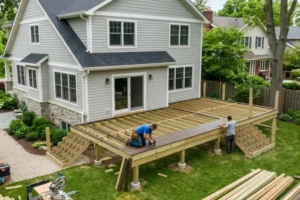
When you’re ready to install your composite deck, finding a qualified contractor is essential. They’ll prepare the area and handle the foundation work, ensuring everything is set for a smooth installation. You might wonder how long it’ll take—let’s break down what you can expect.
Finding a Qualified Composite Decking Contractor
To ensure a successful deck project, it’s essential to select the right parts when building your composite deck. Start by seeking recommendations from family and friends, or check online reviews. Look for professionals with specific experience in composite materials and a solid portfolio. Request quotes from several deck builders to compare pricing and services.
Always verify licensing and insurance and inquire about warranties. Checking references from past clients will give you confidence in the builder’s reliability. With the right professional, your composite deck will be built to last and meet all your expectations.
Prepping the Area and Foundation Work
Proper preparation and a solid foundation are essential for a successful composite deck installation. This ensures your deck will be durable, stable, and long-lasting. Here are the key steps for prepping the area and foundation:
- Clear the Area: Remove grass, debris, and plants to create a clean, level surface.
- Level the Ground: Use a shovel or rake to adjust any uneven spots.
- Install Substructure: Use pressure-treated wood or aluminum beams for support.
- Concrete Footings: Add for extra stability if required by local regulations.
- Weed Barrier: Install it to prevent unwanted plants from growing under your deck.
How Long Does Installation Typically Take?
The time it takes to install a composite deck depends on the size, design complexity, and weather. A standard deck typically takes 3 to 5 days, while more intricate designs could extend to a week or longer. Weather conditions, like rain or wind, may also delay progress. Your contractor will assess the site and provide a more accurate estimate, taking into account preparation work, which typically takes 1-2 days. It is vital to remain flexible and communicate with your composite deck contractors throughout the process.
Composite Deck Maintenance Tips
Maintaining your composite deck is essential for its longevity and appearance. You’ll want to focus on seasonal cleaning, preventing stains and mold, and implementing long-term care strategies. By following these tips, you can keep your deck looking great year after year.
Seasonal Cleaning Do’s and Don’ts
Seasonal care keeps your composite deck looking great all year round. With a few simple do’s and don’ts each season, you can prevent damage and extend your deck’s life and beauty.
- Do sweep regularly to remove dirt and prevent buildup.
- Don’t use harsh chemicals or power washers—they can damage the surface.
- Do clean with mild soap and a soft-bristled brush for safe washing.
- Don’t leave fall leaves or debris to sit—they may cause mold or stains.
- Do use a plastic shovel in winter to avoid surface scratches.
- Don’t ignore gutter overflow—clear downspouts to prevent pooling.
- Do check for wear in spring and wash away winter grime.
- Don’t skip UV protection in summer—use a protectant to reduce sun damage.
Preventing Stains and Mold
Keeping your composite deck clean and free from mold is crucial for its long-term durability and appearance. Regular sweeping removes debris that can trap moisture, promoting mold growth. For spills, clean them up immediately to prevent stains. Use a mild soap and water solution, along with a soft-bristled brush, for tougher stains.
Proper ventilation is also essential; trim overhanging trees or structures to allow sunlight to reach your deck. If you’re wondering what composite decking is made of, remember it’s a blend of wood fibers and plastic, making it resistant to mold. Regular cleaning and a yearly sealant application can also help prevent stains and mold.
Long-Term Care for Longevity
Proper care can extend the life of your composite deck. Here’s a list of essential tasks to ensure its longevity:
- Regular sweeping: Remove dirt and debris to prevent mold and stains.
- Annual cleaning: Use mild soap and a soft brush; avoid harsh chemicals.
- Power washing: Clean tough spots on a low setting to prevent damage to the surface.
- Inspect for wear: Check for loose boards and fading and address them early.
- Apply a sealant: Use a protective sealant specifically designed for composite materials to maintain the appearance and durability.
Final Thoughts: Is a Composite Deck Right for You?
A composite deck can be a fantastic addition to your home, offering durability, aesthetic appeal, and low maintenance. With various styles and colors, you can easily find the perfect fit for your outdoor space. While some downsides exist, the long lifespan and eco-friendly materials make it a worthwhile investment. So, if you’re ready to enhance your backyard, a composite deck might be the right choice! Call today and see for yourself what is a composite deck and what it can do for your home’s value and appeal!
FAQs About Composite Decks
1. How long do composite decks last?
Composite decks can last between 25 to 30 years, offering durability and low maintenance compared to wood. The quality of materials and climate conditions can affect its lifespan. Proper installation is crucial to avoid early wear. Regular cleaning helps extend the deck’s longevity, keeping it in good condition with minimal maintenance.
2. Can composite decking be painted or stained?
Composite decking is not typically recommended for painting or staining, as the surface resists adhesion. While specialized products are available, altering the decking may void your warranty. Instead, consider decorative outdoor elements, such as rugs or furniture, to change the look without compromising durability.
3. Is composite decking slippery when wet?
Composite decking can become slippery when wet, but many products are designed with textured surfaces for better grip. Some offer anti-slip features. Regular cleaning prevents algae buildup, which can make surfaces slipperier. Proper maintenance ensures safer use, especially in humid or rainy climates.
4. What is the cost of composite deck boards per square foot?
Composite deck boards cost between $2 to $7 per square foot, depending on the brand and quality. Premium options can reach up to $10 per square foot. While higher initial costs are common, composite decks often save money in the long term due to their low maintenance and durability.
5. How eco-friendly is composite decking?
Composite decking is eco-friendly, made from recycled wood fibers and plastic, reducing landfill waste. It minimizes deforestation and uses fewer natural resources than traditional wood. Many manufacturers follow sustainable practices. Its longevity and low maintenance reduce the need for harmful chemicals, making it a responsible, sustainable choice for outdoor spaces.